2024 KPEx - Architecture
Main Research Projects & Groups

Data obtained from the Supersite, ground-based aerosol chemistry, vertical observations, and atmospheric circulation experiments will be integrated with environmental monitoring and air quality models. This synergy aims to analyze the formation mechanisms of spring PM2.5 and Ozone events in the Kao-Ping region.
The intensive observation periods (IOPs) of KPEx are synchronized with the NASA ASIA-AQ mission flights over the Kao-Ping area. The synchronized flight dates in 2024 are: Feb 15, Feb 28, Mar 13, and Mar 27.
Monitoring Network Map
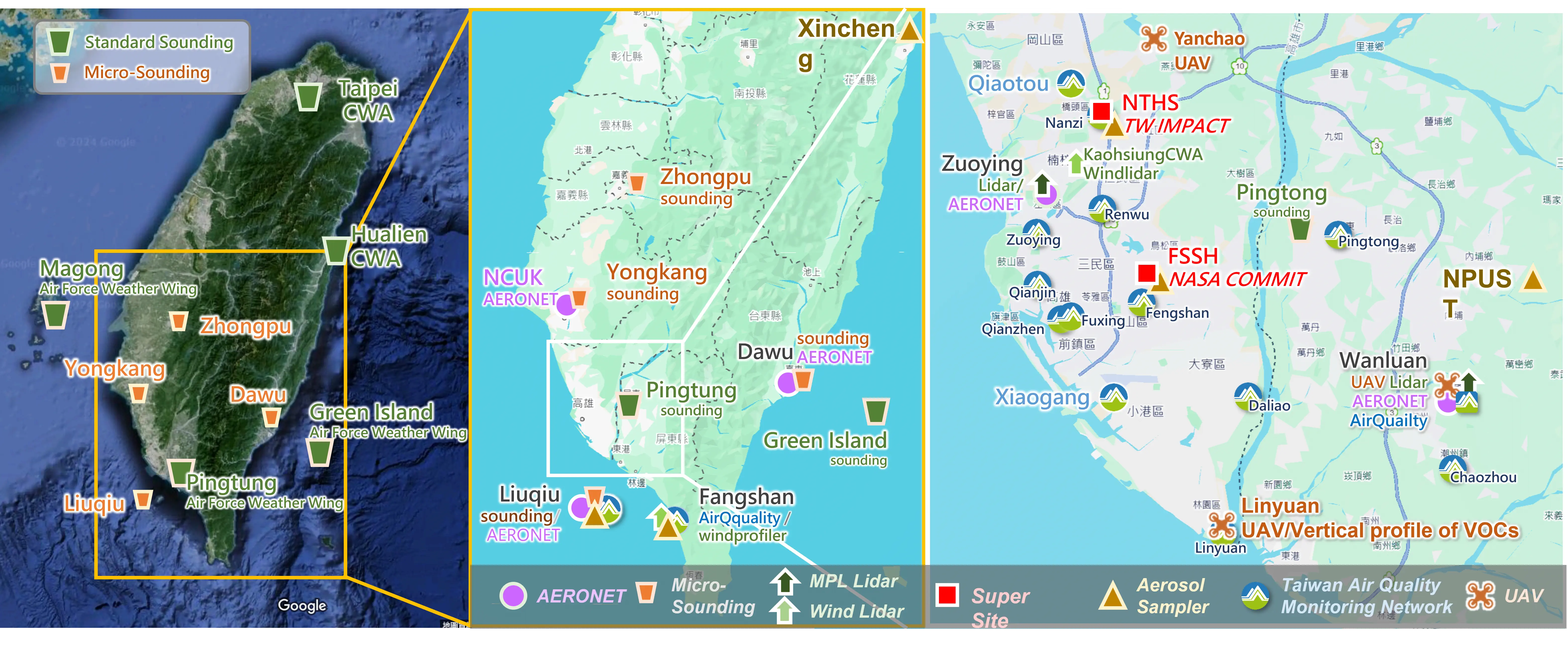
Group Descriptions
Objectives, Methods, Locations, and Expected Outcomes
Ground-Based Aerosol Supersites
Objectives & Distribution:
Deployment of advanced monitoring systems, in-situ measurements, and in-depth analysis of aerosol physical and chemical properties. The NASA COMMIT and NTU IMPACT aerosol supersites are located at two sites: Nan-Tzu High School (upwind) and Feng-Shan Senior High School (downwind).
Key instruments include hourly aerosol nephelometers, chemical monitors, SMPS, CPC, Aethalometers, and air quality/meteorological sensors. This integrated approach explores the complex interactions between atmospheric visibility and aerosol characteristics.
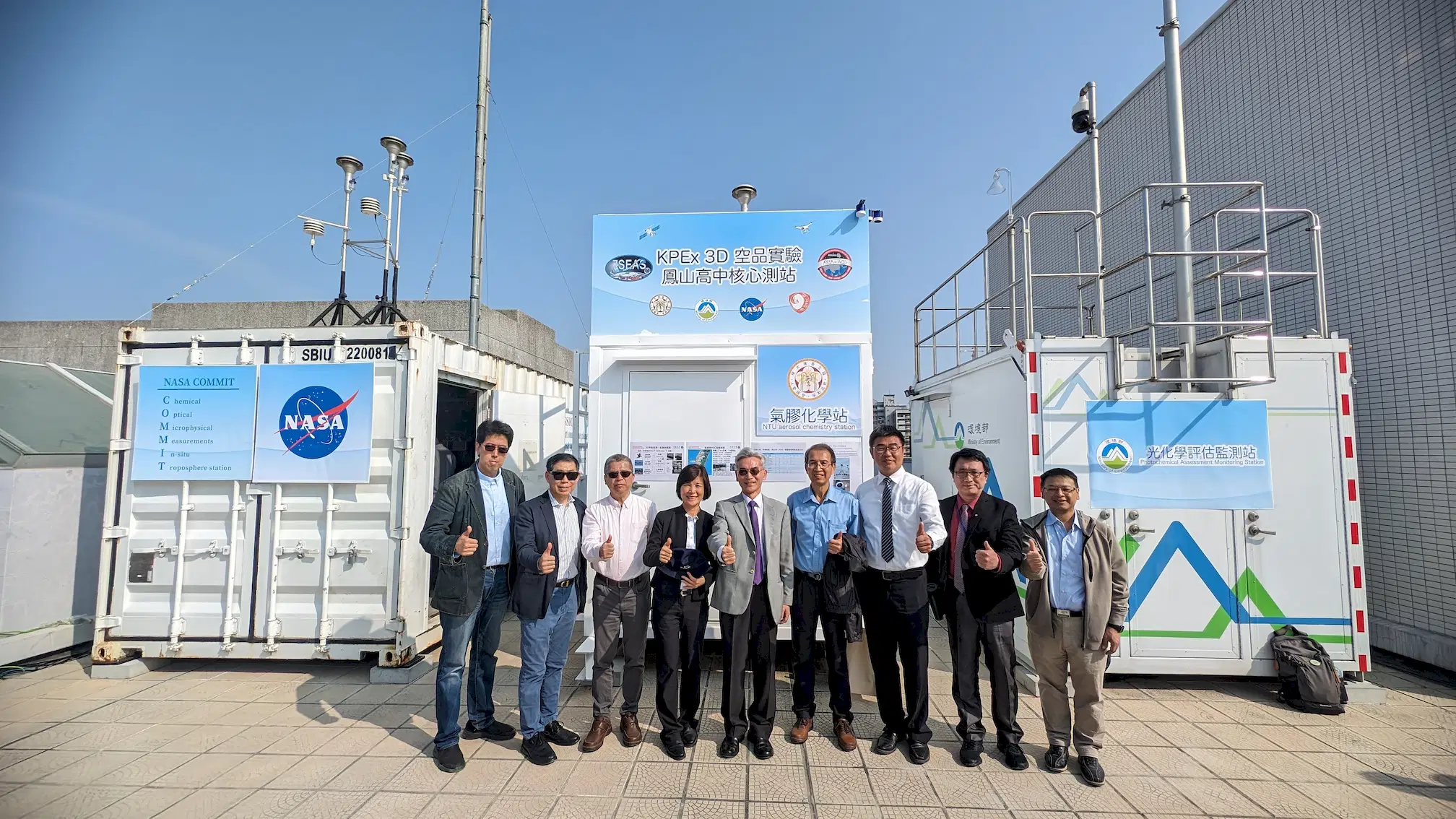
Feng-Shan Senior High School (2024/3/29)
Expected Outcomes:
- Characterize seasonal variations in Particle Size Distribution (PSD) and their impact on visibility to refine air quality management strategies.
- Quantify key drivers of New Particle Formation (NPF) in the KP urban area to provide evidence for pollution control policies.
- Provide high-resolution aerosol data for health and climate impact assessments.
Ground Aerosol Chemistry & Hazardous Pollutants
Objectives & Distribution:
- Sampling, analysis, and source apportionment of aerosol chemistry and hazardous air pollutants (HAPs).
- Investigate the transport and dispersion mechanisms of HAPs governed by atmospheric circulation.
- Sites: NTHS, FSSH, NPUST, Xiaogang, Liuqiu, Fangshan and Xincheng (Hualien).
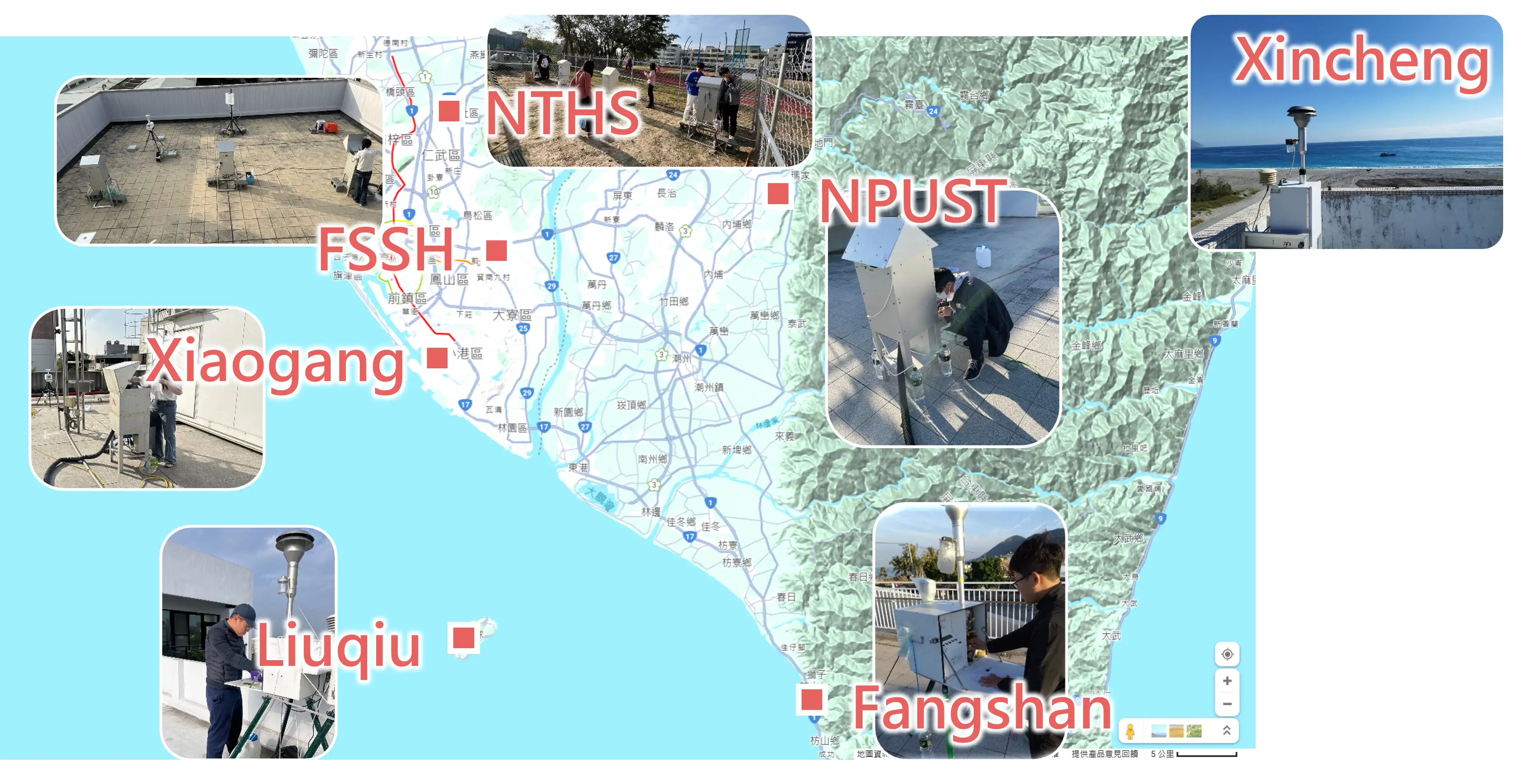
Expected Outcomes:
- Complete source apportionment of HAPs during the KPEx period.
- Analyze HAP characteristics during IOPs vs. non-IOPs.
- Identify the impact of long-range transport on local HAP levels.
- Provide scientific references for government assessments of public health effects.
Local Circulation & Vertical Observation Integration
Objectives & Distribution:
Utilizing vertical sounding and ground-based remote sensing (Sun Photometers, Wind Profilers, Lidar) to study the 3D distribution and temporal evolution of pollutants under high-pollution weather conditions. Data is integrated with ASIA-AQ flights, numerical models, and GEMS satellite data to analyze the correlation between pollution events, airflow, and topography.
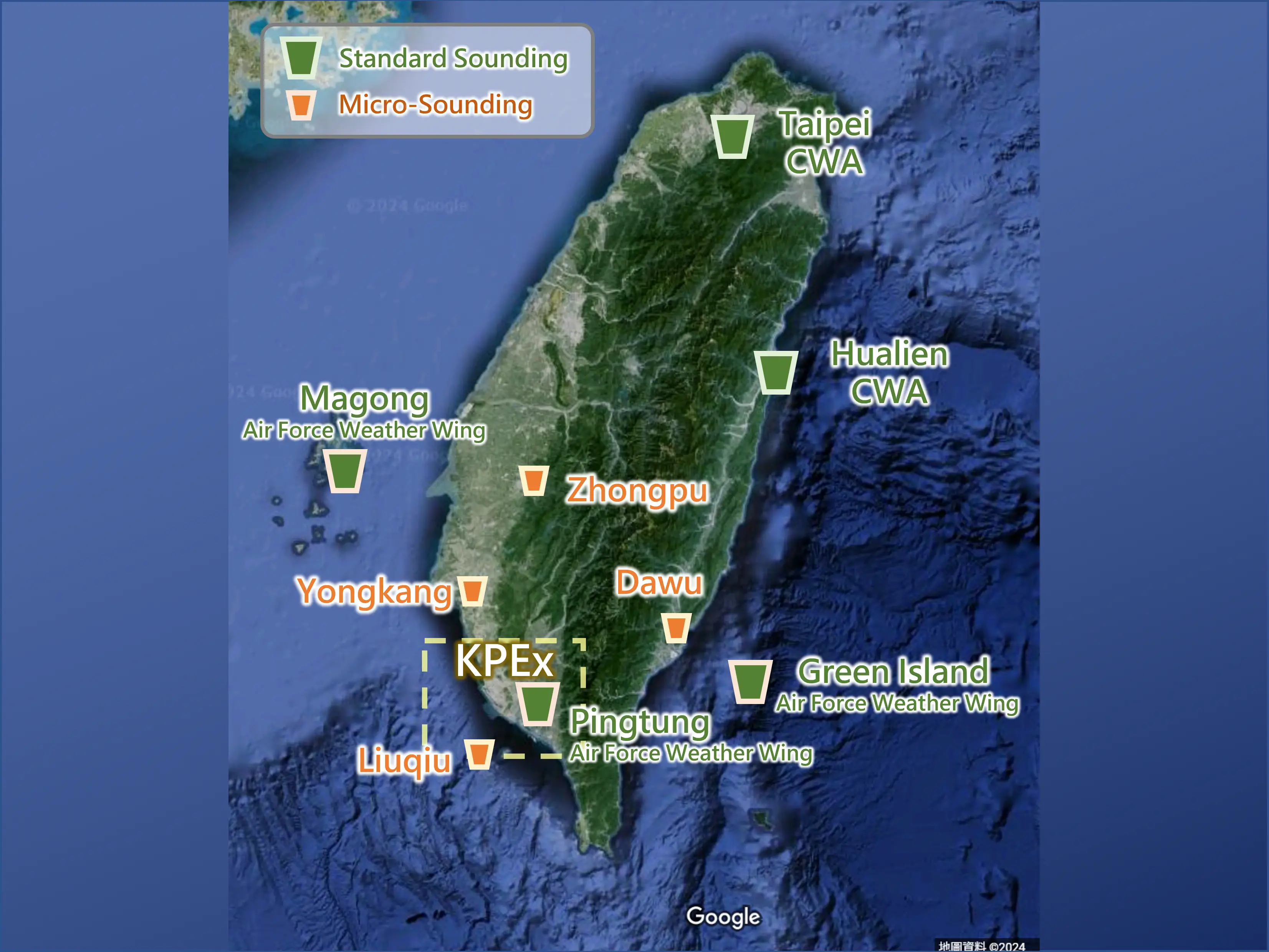
Vertical Sounding Map
Expected Outcomes:
- High-resolution 3D aerosol and wind field data (Feb–Apr 2024).
- Characterize atmospheric vertical structures as indicators of air quality degradation.
- Analyze vertical profile differences of Ozone and its precursors between coastal and inland areas.
- Validate satellite observations using AERONET data and NASA airborne Lidar.
Ground & Vertical VOC Monitoring
Objectives & Distribution:
Investigating the causal relationship between VOC emission sources (e.g., Linyuan Petrochemical Industrial Zone, urban traffic) and downwind Ozone formation using UAVs and ground stations at Linyuan (upwind) and Wanluan (downwind).
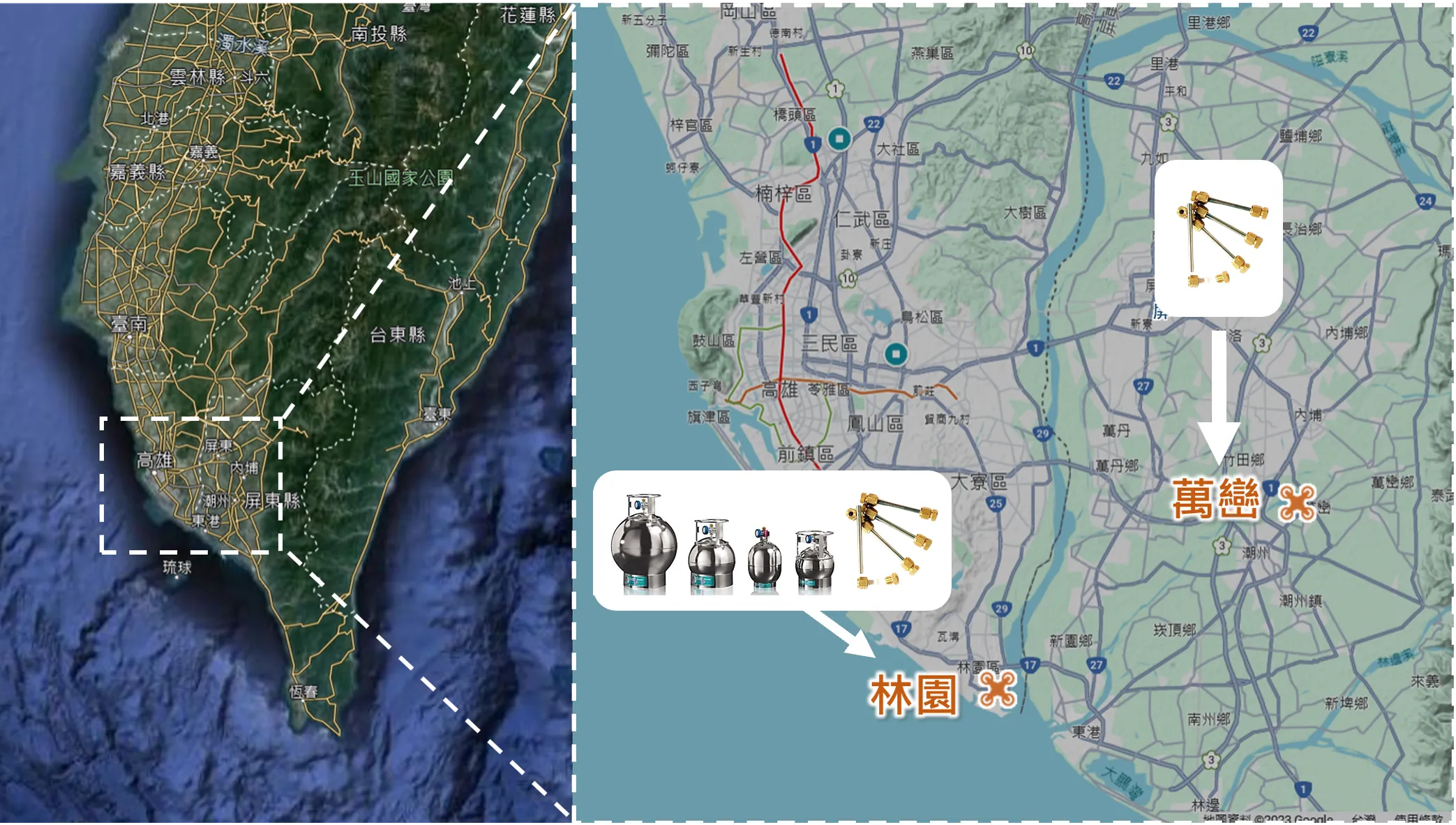
Vertical VOC Monitoring Sites
Expected Outcomes:
- Establish chemical fingerprints of emission sources.
- Quantify contributions from petrochemical, industrial, traffic, and biogenic sources using downwind photochemical station data.
- Calibrate air quality models for more accurate Ozone control strategies.
Satellite Remote Sensing & Applications
Objectives:
Applying SMART-s spectral data and GEMS geostationary satellite data to map the spatiotemporal distribution of Organic Carbon (OC) and Black Carbon (BC) aerosols. Findings will also be applied to Himawari-8 AHI to identify dust, sulfate, and BC types.

Satellite Application Schematic
Expected Outcomes:
- Construct absorption and scattering spectral characteristics for OC and BC.
- Provide high-frequency (hourly) distribution maps of aerosol types across Southeast Asia and Asia via GEMS and Himawari-8.
Atmospheric Modeling & Data Integration
Objectives:
Utilizing WRF-CMAQ and WRF-Chem models to investigate the transport, transformation, and deposition of pollutants. KPEx and NASA 3D observation data are used to validate and improve model performance.

Model Application Schematic
Expected Outcomes:
Simulating air quality at 1km and 3km resolutions for Feb–Apr 2024. Collaboration with domestic research teams to conduct case studies using IOP 3D data, ultimately refining control strategies for Ozone and PM2.5 events.